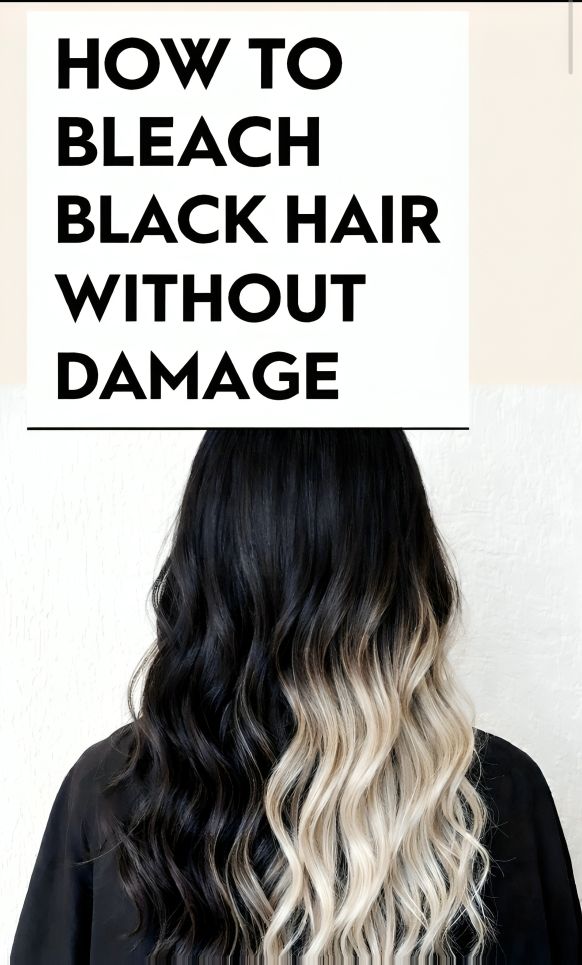
That conversation happens at least once a week in my salon. Bleaching black hair is one of the most requested transformations I get, and honestly, it's also one of the trickiest.
The darker your starting point, the more careful you need to be about protecting your hair through the process.
What makes bleaching black hair without damage so challenging is that you're asking your hair to do something pretty extreme. Black hair has the most pigment packed into each strand, and lifting all that color means the bleach has to work harder and longer.
But here's what I've learned after years of doing this: damage isn't inevitable. When you understand how bleach actually works and respect your hair's limits, you can lighten black hair dramatically while keeping it healthy enough to style and enjoy.
Key Takeaways
- Bleaching black hair safely requires multiple sessions spaced weeks apart, not one aggressive application that destroys your hair structure.
- The condition of your hair before you even open the bleach bottle matters more than the bleach itself for preventing damage.
- Understanding your hair's natural undertones and how they'll show up during lifting helps you set realistic expectations and avoid over-processing.
Why Black Hair Is Different When It Comes To Bleaching
From my experience working with all different hair colors, black hair presents unique challenges that you won't face with lighter starting shades. The pigment molecules in black hair are larger and more densely packed than in brown or blonde hair. When bleach breaks down these molecules, it has to work through multiple color stages before you even see a noticeable lift.
What usually happens is this: black hair goes through orange, then yellow, then pale yellow stages before reaching blonde. Each stage requires the bleach to keep working, and the longer bleach sits on your hair, the more it can damage the protein structure. This is why one massive bleaching session on black hair almost always ends in severe damage or breakage.
I've noticed that people don't realize their natural undertones will affect how their hair looks at each stage. Asian hair tends to pull very warm and brassy. African hair often has red undertones that can be stubborn. Caucasian black hair might have cooler undertones. Knowing this ahead of time helps you understand why your hair might look orange at first and that it's completely normal.
Preparing Your Hair Before You Touch Any Bleach
One mistake I see people make all the time is starting the bleaching process when their hair is already damaged. If your hair is dry, breaking easily, or has been chemically treated recently, you're setting yourself up for disaster. Bleach doesn't repair anything. It only damages less or damages more depending on what you're working with.
What works best is spending at least two to three weeks preparing your hair. I tell my clients to deep condition twice a week with protein treatments and moisture masks. You want to strengthen your hair's internal structure before you ask it to withstand a chemical process. Think of it like training for a marathon. You wouldn't run twenty miles without building up your endurance first.
During this prep period, avoid heat styling as much as possible. Stop using flat irons and curling wands. Let your hair air dry. The healthier your starting point, the better your hair will handle the bleaching process. I also recommend trimming off any split ends before you start because damaged ends will only get worse once bleach touches them.
Choosing The Right Bleach Products
Not all bleach is created equal, and this matters more with black hair than with any other color. I always use a quality powder bleach mixed with a lower volume developer for the first session. Most people think higher volume means better results, but that's not true when you're trying to avoid damage.
For black hair, I typically start with 20 volume developer. Yes, it works slower than 30 or 40 volume, but slower is actually what you want. The gradual lifting gives you more control and puts less stress on the hair shaft. You can always do another session, but you can't undo fried hair.
Some bleaches come with built-in bonding treatments or proteins. These are worth the extra cost when you're working with black hair. Products like Olaplex or bond-building additives help protect the internal structure of your hair while the bleach does its work. I add these to almost every bleach mix for dark hair.
The Multiple Session Approach That Actually Works
Here's the honest truth about bleaching black hair: you need to think in terms of sessions, not one appointment. When someone asks me how many sessions it will take to go from black to blonde, my answer depends on their hair's condition and their goal shade. But it's rarely less than three sessions, and often it's four or five.
Each session should be spaced at least two to three weeks apart. This gives your hair time to recover and lets you assess the damage level before moving forward. I've seen too many people rush the process and end up with hair that snaps off when you brush it. That waiting period feels long when you're excited about your new color, but it's absolutely necessary.
During the first session on black hair, you're typically only going to lift to a dark orange or copper stage. This looks alarming to most people because it's so far from their goal, but it's actually a good sign. It means the bleach is working without over-processing. You tone it to a more wearable shade and let your hair rest before the next session.
Step By Step Process For The First Bleaching Session
When you're ready to start your first bleaching session, preparation is everything. Make sure your hair hasn't been washed for at least 24 hours. The natural oils on your scalp provide a protective barrier against the bleach. Your hair should be completely dry before you apply anything.
Mix your bleach and developer according to the package instructions. The consistency should be like thick yogurt, not runny. Start applying at the mid-lengths of your hair, not at the roots. Roots process faster because of the heat from your scalp, so you save them for last.
Work in small sections about half an inch wide. This ensures even coverage and prevents missed spots. Apply the bleach thoroughly but don't oversaturate to the point where it's dripping everywhere. You want good coverage without waste.
Here's the application order I follow:
- Apply to mid-lengths first, starting at the back of your head and working forward.
- Move down to the ends, which often need the most lightening.
- Finally apply to the roots, working quickly because they'll process fastest.
- Once everything is covered, check your timing and monitor the lift every five to ten minutes.
The processing time for black hair on the first session is usually 30 to 45 minutes, but you need to watch it closely. Don't just set a timer and walk away. Check different sections regularly to see how the color is lifting. When you reach a dark orange or copper stage, it's time to rinse even if you haven't hit your time limit yet.
Common Mistakes That Lead To Damage
The biggest mistake I see is people leaving bleach on too long trying to get lighter in one session. When bleach has done all the lifting it can do, leaving it on longer doesn't lighten your hair more. It just damages it. You'll notice the hair starts to feel gummy or stretchy. That's protein damage happening in real time.
Another mistake is using heat to speed up the process. Some people wrap their hair in plastic and sit under a dryer or use a blow dryer on the bleach. This can cause extremely uneven processing and hot spots that literally fry sections of your hair. Room temperature is safest for black hair.
Overlapping bleach on previously bleached hair is another common problem. When you do your second or third session, you should only be applying bleach to the new growth and the areas that didn't lift enough. Putting fresh bleach on already-lightened hair will damage those sections severely.
I've also noticed people don't rinse thoroughly enough. Bleach residue left in your hair continues to damage it even after you think you're done. You need to rinse until the water runs completely clear, then rinse some more. Follow up with a neutralizing shampoo that stops the bleaching action.
What To Do Immediately After Bleaching
The moment you rinse out the bleach, your hair is in its most vulnerable state. The cuticle is lifted and the protein structure has been compromised. This is when your aftercare routine makes the difference between damaged hair and hair that stays healthy enough for the next session.
I always apply a deep conditioning treatment or hair mask immediately after rinsing the bleach. Leave it on for at least 15 to 20 minutes. Your hair is porous right now and will soak up that moisture and protein like a sponge. This is actually the best time for a treatment because your hair can absorb it so well.
Don't towel dry roughly. Instead, gently squeeze out excess water and wrap your hair in a microfiber towel or old t-shirt. Regular towels create too much friction on compromised hair. Let your hair air dry whenever possible instead of using heat tools.
For the next few days after bleaching, treat your hair like it's made of silk threads. Use a wide-tooth comb instead of a brush. Sleep on a silk or satin pillowcase to reduce friction. Avoid tight hairstyles that put tension on the hair shaft.
Toning Between Sessions
After your first bleaching session on black hair, you're going to have very warm tones. Orange, copper, or brassy yellow are all normal at this stage. This is where toning comes in, and it's something a lot of people skip because they think it's optional. It's not.
Toning serves two purposes when you're bleaching black hair in stages. First, it neutralizes those warm tones so your hair looks more polished between sessions. Second, it deposits some pigment back into your hair, which actually helps protect it and gives it more body.
For orange tones, you need a blue-based toner. For yellow tones, you need a purple-based toner. The color wheel is your friend here. I typically use a demi-permanent toner rather than permanent color because it's gentler and fades more naturally.
Apply toner to clean, damp hair. Process it for the time recommended on the package, usually 20 to 30 minutes. The result won't be your final color, but it will be something you can live with while your hair recovers before the next bleaching session.
Maintaining Hair Health Between Sessions
Those two to three weeks between bleaching sessions are crucial for keeping your hair healthy enough to continue the process. This isn't downtime where you ignore your hair. It's active recovery time where you're rebuilding strength and moisture.
Deep condition at least twice a week with alternating treatments. One week focus on protein treatments that rebuild the hair's internal structure. The next week focus on moisture treatments that hydrate and soften. Black hair that's been bleached needs both, and alternating prevents protein overload or moisture overload.
Here's what your between-session routine should look like:
- Wash your hair only two to three times per week with sulfate-free shampoo.
- Use a leave-in conditioner every time your hair gets wet.
- Apply a hair oil or serum to the ends to prevent splitting and breaking.
- Avoid heat styling or use the lowest heat setting possible with a heat protectant.
- Get a trim if you notice any splitting or damage at the ends.
I also tell clients to take hair vitamins or biotin supplements during this time. While they won't repair existing damage, they do support new hair growth and can help your hair grow in healthier as you continue the lightening process.
How To Know When Your Hair Is Ready For The Next Session
Not everyone's hair recovers at the same rate. Some people can safely do another bleaching session after two weeks. Others need a full month. You need to assess your hair's condition honestly before moving forward.
Here's what I check before scheduling the next session. First, I do the stretch test. Take a strand of hair when it's wet and gently pull it. Healthy hair stretches a bit and returns to normal. Over-processed hair stretches excessively and breaks or doesn't return to its original length.
Second, I look at how the hair feels when it's dry. If it feels gummy, sticky, or excessively rough, it needs more recovery time. Your hair should feel relatively smooth and have some elasticity even after bleaching.
Third, I check for excessive breakage. Some shedding is normal, but if you're seeing lots of short broken pieces or your hair is snapping when you brush it, you need to wait longer and focus on repair treatments.
When someone asks me if their hair is ready, I tell them this: when in doubt, wait another week. Patience might feel frustrating, but it's always better than having to cut off damaged hair later.
Professional Tips For Better Results
After years of bleaching dark hair, I've picked up some techniques that make a real difference in the final results and the health of the hair. These are the things that separate an okay bleach job from a great one.
First, sectioning matters more than most people think. I divide hair into at least six sections, sometimes eight or ten for very thick hair. Smaller sections mean more even coverage and better control over the process. Use clips that won't slip and mark your sections clearly so you don't lose track.
Second, work quickly but carefully. Once you mix bleach and developer, the clock is ticking on how effective it will be. You want to get it all applied within 15 to 20 minutes so that all sections have roughly the same processing time. This prevents uneven results.
Third, pay attention to your hair's porosity. Previously damaged areas or the ends of your hair are more porous and will lift faster. These sections need less bleach time, not more. Sometimes I apply bleach to these areas last or use a lower volume developer on them.
I also keep a spray bottle of water nearby. If a section is processing too fast, a light mist of water can slow it down. This gives you more control and helps prevent over-processing in spots that lift quickly.
Dealing With Damage If It Happens
Sometimes despite your best efforts, you end up with more damage than you expected. Maybe you left the bleach on too long, or your hair was more fragile than you realized. Whatever the reason, you need to address it immediately before it gets worse.
If you notice gummy or stretchy hair while the bleach is still on, rinse it out immediately. Don't wait for your timer. That texture means the protein bonds are breaking down too much. Rinse thoroughly with cool water and apply a protein treatment right away.
For hair that feels dry and straw-like after bleaching, you need intensive moisture treatments. Look for products with ingredients like shea butter, coconut oil, argan oil, and ceramides. Use these treatments every time you wash your hair until you see improvement.
If you have significant breakage, you might need to stop the bleaching process entirely and focus on repair for several months. I know this is disappointing when you're trying to reach a lighter shade, but continuing to bleach severely damaged hair will only make it worse. Sometimes the best decision is to embrace the current shade, tone it to something wearable, and let your hair recover.
Realistic Expectations For Going From Black To Blonde
I think one of the reasons people damage their hair bleaching it is because they have unrealistic expectations about the timeline. Social media and hair transformation videos make it look like you can go from black to platinum in one afternoon. That's either heavily edited or they're using wigs and extensions.
In reality, going from natural black hair to a true blonde can take anywhere from three to six months of careful processing. If your hair is particularly dark or resistant, it might take even longer. Each session lifts you one or two levels, and you need recovery time between sessions.
Your hair will go through some awkward stages. You'll probably spend time being orange or brassy yellow before you get to blonde. Having realistic expectations about this helps you stay patient with the process instead of rushing and causing damage.
Also understand that your hair texture will change. Bleached hair is more porous, which means it behaves differently than virgin hair. It might be drier, more prone to frizz, or require different styling products. This isn't necessarily damage, it's just the reality of chemically processed hair.
Low Maintenance Care For Bleached Black Hair
Once you've successfully lightened your black hair, the maintenance phase begins. Bleached hair requires more care than virgin hair, but you don't need a complicated ten-step routine to keep it healthy. I'm all about finding what works and keeping it simple.
The most important thing is using the right shampoo and conditioner. Switch to sulfate-free products designed for color-treated or bleached hair. Sulfates strip moisture and can make your hair feel like straw. I wash my clients' bleached hair only two or three times per week maximum.
Purple shampoo becomes your best friend for fighting brassiness. Use it once a week or whenever you notice warm tones creeping back in. Don't use it every wash or your hair can take on a purple tint. Once a week is usually enough.
Weekly deep conditioning is non-negotiable. Pick one day a week where you apply a mask or treatment and leave it on for at least 30 minutes. This routine keeps your hair from becoming dry and brittle over time.
Quick Checklist For Bleaching Black Hair Safely
Before you start any bleaching session, run through this checklist to make sure you're set up for success:
- Hair hasn't been washed for 24 to 48 hours before bleaching.
- You have high-quality bleach powder and 20 volume developer ready.
- Deep conditioning treatments are stocked for aftercare.
- Hair is trimmed and split ends are removed.
- You have at least two hours of uninterrupted time.
- All tools are ready including brushes, bowls, clips, and gloves.
- You've done a strand test to check processing time.
- You understand you're only targeting one or two levels of lift this session.
Having everything prepared before you start mixing bleach makes the whole process smoother and helps you avoid mistakes that come from rushing or being unprepared.
Do's And Don'ts Of Bleaching Black Hair
Do:
- Do multiple sessions spaced weeks apart instead of one aggressive session.
- Do use protein and moisture treatments before and after bleaching.
- Do strand tests to check how your hair will react.
- Do tone between sessions to neutralize warm tones.
- Do trim damaged ends before bleaching.
- Do monitor the bleaching process every few minutes.
Don't:
- Don't use 40 volume developer on black hair expecting faster results.
- Don't overlap bleach onto previously bleached sections.
- Don't add heat to speed up processing.
- Don't skip the waiting period between sessions.
- Don't bleach hair that's already severely damaged.
- Don't leave bleach on longer than 45 minutes on virgin black hair.
Frequently Asked Questions
How many sessions does it take to go from black to blonde hair?
Most black hair needs three to five bleaching sessions to reach a true blonde shade safely. Each session should be spaced at least two to three weeks apart. The exact number depends on your hair's condition, thickness, and how dark your starting point is. Rushing this process by doing too many sessions too quickly will result in severe damage.
Can I bleach black box dye or only natural black hair?
You can bleach hair that has black box dye, but it's significantly harder and more damaging than bleaching natural black hair. Box dye molecules sit on top of your hair shaft and are larger than natural pigment. You'll need more sessions and the results are less predictable. I always recommend color removal treatment first before bleaching over box dye.
Why does my black hair turn orange when I bleach it?
Orange tones are completely normal when lifting black hair. Your hair goes through stages as pigment is removed: black to dark brown to red-brown to orange to yellow to pale yellow. Orange means the bleach is working and you're in the middle stages. You need additional sessions to push through to blonde, and toning between sessions helps neutralize the orange.
Is it better to bleach black hair at home or in a salon?
For your first time bleaching black hair, a salon is definitely safer. A professional can assess your hair's condition, mix the right strength bleach, apply it evenly, and monitor the process. If you choose to do it at home, start with just a few test pieces underneath before doing your whole head. The learning curve can be expensive if something goes wrong.
How long should I wait between bleaching sessions on black hair?
Wait at least two to three weeks between sessions, but longer is often better. Your hair needs time to recover and rebuild strength. Some hair types need four weeks between sessions. Do a stretch test and check your hair's elasticity before scheduling the next session. If your hair feels gummy or breaks easily, wait another week or two.
What volume developer should I use on black hair?
Start with 20 volume developer for the first session on black hair. While 30 or 40 volume lifts faster, they also cause significantly more damage. The slower lift from 20 volume gives you more control and is gentler on your hair structure. You can use 30 volume in later sessions on regrowth only if your hair is handling the process well.
Can coconut oil protect my hair during bleaching?
Applying coconut oil before bleaching can provide some protection, but it also slows down the bleaching process. The oil creates a barrier that the bleach has to work through. Some people swear by it for preventing damage, while others find it makes lifting uneven. If you try it, use just a small amount on the mid-lengths and ends, not the roots.
How do I fix severely damaged hair from bleaching?
If your hair is severely damaged from bleaching, stop all chemical processing immediately. Focus on protein treatments to rebuild structure and moisture treatments to restore elasticity. Trim off the most damaged sections. Use bond-building products designed for chemically damaged hair. In extreme cases, you might need to cut your hair shorter and let healthy hair grow in while you repair what's left.
Conclusion
Bleaching black hair without damage comes down to patience, quality products, and respecting your hair's limits. The process takes time, sometimes months, to reach your goal shade safely. But when you break it into multiple sessions, prepare your hair properly, and give it recovery time between treatments, you can achieve dramatic color transformations while keeping your hair healthy enough to enjoy.
From my years of experience doing this, the people who get the best results are the ones who accept that this is a journey, not a quick fix. They understand their hair will go through awkward stages. They commit to the aftercare routine. They don't rush the process when their hair is telling them it needs more time.
Your hair is unique, and how it responds to bleach might be different from someone else's experience. Pay attention to what your hair is telling you. If something doesn't feel right, stop and reassess. Trust the process, take care of your hair between sessions, and you'll get to your goal color with hair that's still strong, shiny, and healthy enough to style however you want.